



The Six Nations returns this week with a sense of familiarity that feels quietly defiant. In an era where elite sport is increasingly fragmented across subscriptions, apps and regional paywalls, this tournament continues to arrive largely intact, accessible and culturally unavoidable. It remains one of the few major international competitions where fans can still watch every kick, tackle and late collapse without a credit card.
That accessibility matters, but so does the rugby. After a record breaking championship last year, with more tries than any previous edition, the 2026 tournament arrives carrying expectation rather than nostalgia. The margins look thin, the squads feel volatile, and the usual assumptions feel less secure than they did even a year ago.
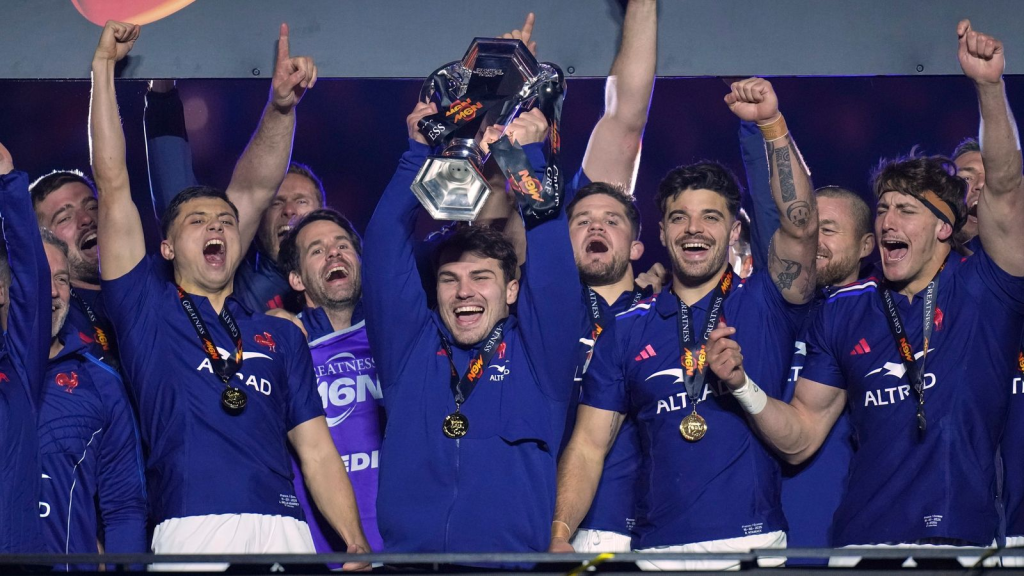
France, champions carrying weight and options
France arrive as defending champions with the unusual burden of depth. Last year proved they can lose star names and still overwhelm opponents, a luxury no other side truly enjoys. Antoine Dupont’s return sharpens the picture further, not because France lacked control without him, but because his presence lifts their ceiling again.
The selection calls ahead of this campaign have already underlined how ruthless France are prepared to be. Reputation counts for less than form, and experience is no longer a safety net. That makes them frightening over five rounds, especially with England and Ireland visiting Paris. Home advantage matters more in this championship than any other major rugby competition, and France have engineered a fixture list that suits their strengths.
The question is not whether France can win, but whether they can manage expectation. As champions, they are now the side everyone measures themselves against.
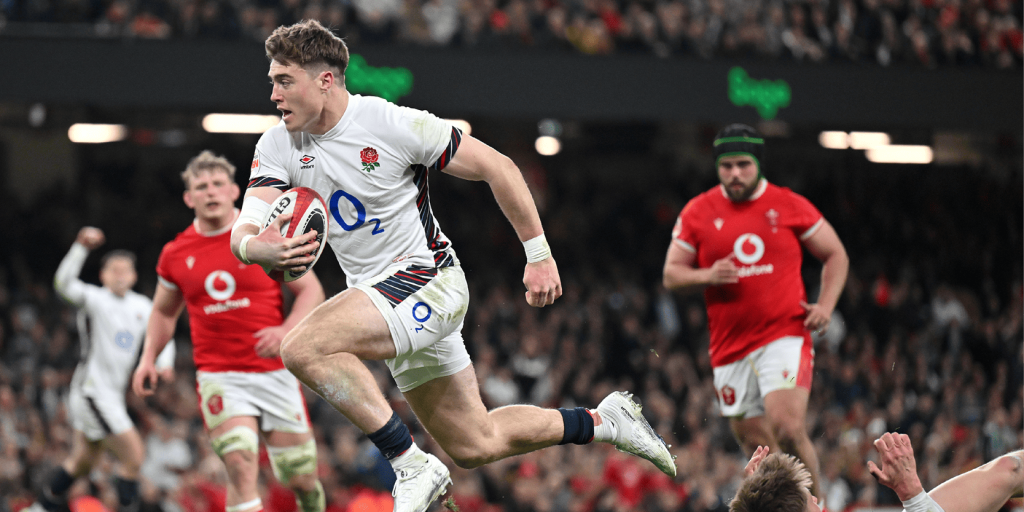
England, belief returning at the right time
England have spent several seasons searching for cohesion and clarity. This time, they arrive with both. An extended winning run has given the squad confidence without tipping into arrogance, and a younger core is beginning to look settled rather than experimental.
What stands out is balance. England are no longer relying on one dominant pack or one tactical approach. The back row has energy, the midfield has pace, and there is enough attacking ambition to punish sides who fade late. That matters in a tournament where momentum often swings after round three.
The looming trip to Paris hangs over everything. If England are still unbeaten by then, belief will harden into expectation, and that is where this side will truly be tested.
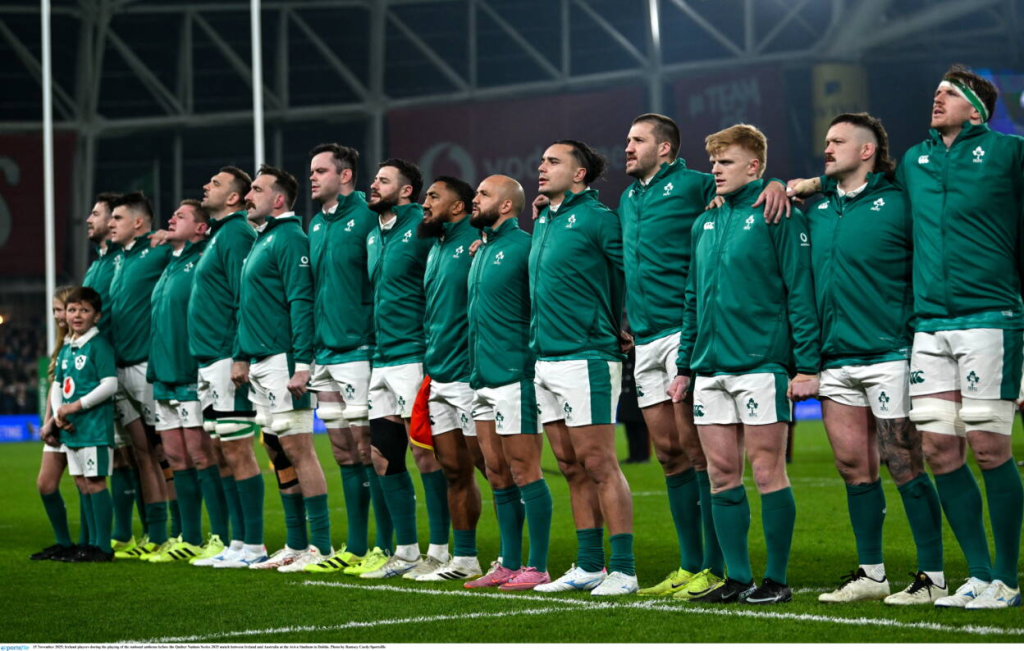
Ireland, resilience under strain
Ireland’s recent dominance now feels slightly distant, not because of collapse, but because the margins have tightened. Injuries in key positions have disrupted continuity, particularly in the front row and at fly half, and this campaign looks more like a reset than a defence of past success.
That does not make Ireland harmless. Their systems remain among the most polished in the competition, and their ability to manage territory and tempo can suffocate opponents. The challenge is depth. Away trips to France and England leave little room for error, and early results will shape whether Ireland chase the title or simply stay in contention.
Ireland remain dangerous, but this time they may need patience as much as precision.

Scotland, promise demanding proof
Scotland always arrive with optimism, and this year it feels more justified than usual. Strong domestic form and returning leaders have raised expectations, yet the familiar question lingers. Can Scotland sustain performance across five rounds rather than two or three?
The fixtures offer opportunity. Italy away, England at home and Wales away provide a chance to build momentum early. If Scotland are genuine contenders, this is where it must show. Finn Russell’s influence remains critical, but the supporting cast around him now looks stronger and more assured.
This is a Scotland side that believes it belongs at the top table. The tournament will decide whether that belief finally translates into silverware.

Italy, respect finally earned
Italy are no longer the match everyone circles as guaranteed points. Progress has been steady rather than spectacular, but it is real. Their defensive organisation has improved, their attack carries intent, and individual talent is emerging earlier and staying longer.
The challenge is consistency. Italy still struggle to turn competitive performances into victories, but opponents now know that switching off brings consequences. A statement win feels closer than it has in years, and avoiding the wooden spoon again is a realistic expectation rather than hope.
Italy’s presence improves the championship, and that alone marks how far they have come.

Wales, rebuilding under pressure
Wales enter the tournament with survival firmly in mind. Recent campaigns have been bruising, and confidence has suffered as a result. A new coaching structure brings fresh ideas, but cohesion takes time, and this championship rarely offers patience.
Home fixtures provide opportunity, particularly against Scotland and Italy, but injuries to key leaders complicate the task. There is talent here, especially in the backline, yet belief has been fragile. Avoiding another bottom finish would represent progress, even if ambition remains higher.
For Wales, this Six Nations is about stability before resurgence.
TV coverage across UK, Ireland, Europe and North America
In the UK, every match remains free to air, split between the BBC and ITV. All England fixtures are shown on ITV, while the BBC carries matches involving Scotland and Wales at home. Live viewing is available on BBC One or BBC Two and ITV1, with streaming via BBC iPlayer and ITVX.
In Ireland, the Six Nations continues to be shown free to air on RTÉ, with live broadcasts and full streaming coverage available through RTÉ Player on mobile, tablet and connected TVs.
In France, coverage is shared between France Télévisions and TF1, with matches shown live on linear channels and streamed online via france.tv and myTF1, depending on the fixture.
In Italy, matches are broadcast by RAI, with live television coverage and on demand streaming available through RaiPlay, keeping the tournament accessible without subscription barriers.
In Germany, Six Nations matches are shown through public broadcasters ARD and ZDF, with live streams and replays available via ARD Mediathek and ZDF’s online platforms, alongside wider European sports coverage.
In Spain, coverage is provided by RTVE, with matches available on free to air television and streamed live through RTVE Play across devices.
In the United States, Six Nations coverage is led by Peacock, which offers live streaming of matches throughout the tournament, with selected fixtures also appearing on NBC affiliated channels.
In Canada, the tournament is shown by Premier Sports, which provides live broadcasts and streaming access as part of its specialist rugby coverage.

Watching the Six Nations while travelling
Broadcast rights are tied to geography, and streaming platforms usually restrict access outside their home markets. That can be frustrating if you are travelling during the tournament and want to follow familiar coverage.
Using a VPN allows devices to connect as if they are back home, restoring access to services like BBC iPlayer or RTÉ Player while abroad. For those moving between countries during February, it offers a practical way to maintain consistent viewing without chasing unfamiliar platforms. LibertyShield offers VPN access across the UK, Ireland, Europe, and North America, with a 48-hour free trial that suits a tournament schedule with no commitment.
Used sensibly, it is simply another tool for keeping sport accessible while on the move.
Why this Six Nations feels finely balanced
This championship arrives after a weekend of sport that reminded everyone how age, expectation and history can be overturned quickly. Youth has flourished, experience has adapted, and established hierarchies have softened. The Six Nations reflects that same tension.
France have depth, England have momentum, Ireland have systems, Scotland have belief, Italy have credibility and Wales have urgency. No side enters without questions, and no fixture looks routine.
That uncertainty is the tournament’s greatest strength. Free to air access ensures it remains shared, discussed and argued over, while the rugby itself promises pressure rather than procession. By the time March arrives, the table will feel earned rather than inevitable.